FieldPocket Studio may earn a commission from purchases made through links on this site at no extra cost to you. How FieldPocket Studio earns affiliate commissions
The romantic ideal of watercolor travel sketching involves pulling a tiny tin from your coat pocket, flicking open a brush, and capturing a sunlit café or mountain ridge in moments. In practice, field painting is an unforgiving test of ergonomics. When a palette is too cramped, puddles bleed into adjacent pans. When a kit lacks adequate mixing surfaces, color control collapses. And when a box is too bulky, it stays packed at the bottom of your bag.
As analyzed in Paul Rubens' guide on mini versus pocket watercolor tradeoffs, the primary compromise in mobile painting is balancing quick portability against mixing discipline. A 12-color setup offers the truest pocket footprint, whereas 24- to 36-color tins trade strict pocketability for ready-made convenience. Below, we examine four distinct compact watercolor formats—from clip-on micro-palettes to traditional metal pocket boxes—to evaluate how they handle the realities of painting on the go.
The Contenders: Field Formats at a Glance
- Mixing Area: Are there distinct, partitioned wells that prevent washes from running into dry pigment pans?
- Portability & Ergonomics: Can the palette be comfortably held in one hand while standing, or does it require a stable tabletop?
- Pan Versatility: Are the pans permanently molded or modular and refillable using standard half-pans and tube paint?
1. Ultra-Compact Plastic Foldouts: SeamiArt 12-Color Travel Set
For painters whose absolute priority is weight and size, the SeamiArt 12-color kit strips away almost every ounce of surplus bulk. Designed to fold out horizontally, this palm-scale plastic palette integrates two flip-out mixing flaps on either side of a central color strip, complete with a small clip mechanism to attach directly to a sketchbook edge.

Field Performance: The primary strength here is sheer convenience. At roughly $5.50, it is an accessible daily-carry setup that fits inside a shirt pocket without dragging down the fabric. Having two divided side flaps offers surprising mixing area for a unit this small. However, the micro-wells mean you must work with smaller brushes (round size 4 or below); larger mop or wash brushes will inevitably contaminate adjacent colors.
Who It Suits: Urban sketchers who work in pocket notebooks (A6 or smaller), daily journalers, and minimalists who prefer rapid spot-color sketches over expansive wet-in-wet washes.
2. Traditional Enameled Metal Field Tins: MeiLiang 36/48 Pan Set
The enameled metal tin remains the enduring gold standard for outdoor watercolorists for a reason: durability. MeiLiang's pocket box incorporates individual half-pans held securely in metal tracks, a hinged fold-out mixing tray, and a sturdy bottom metal ring designed to slide over your thumb for one-handed balance while standing.

Field Performance: The enameled tin provides structural stability that lightweight plastics cannot match. The thumb ring on the bottom allows you to brace your sketchbook and paint box simultaneously while standing at a crosswalk or trail bench. Furthermore, because the pans are standard individual units, you can rearrange your color order or replace depleted factory cakes with artist-grade pigments from your own tubes down the road.
The trade-off is weight. Even in a compact footprint, a metal tin loaded with 36 cakes has noticeable heft. If you prefer deep, loose mixing wells, the flat depressions inside the fold-out lid will fill up quickly, requiring frequent wiping with a pocket sponge or rag.
Who It Suits: Plein air painters and students who want a durable, drop-resistant studio-in-a-box that can take a beating inside a daypack and be customized over time.
3. High-Density Pocket Boxes: 12/24/36 Color Metal Box
Sitting between minimal sketch tools and large studio boxes, this compact metal box format maximizes pan density within a classic pocket chassis. It provides vivid, student-accessible solid cakes alongside a bundled water-reservoir brush.
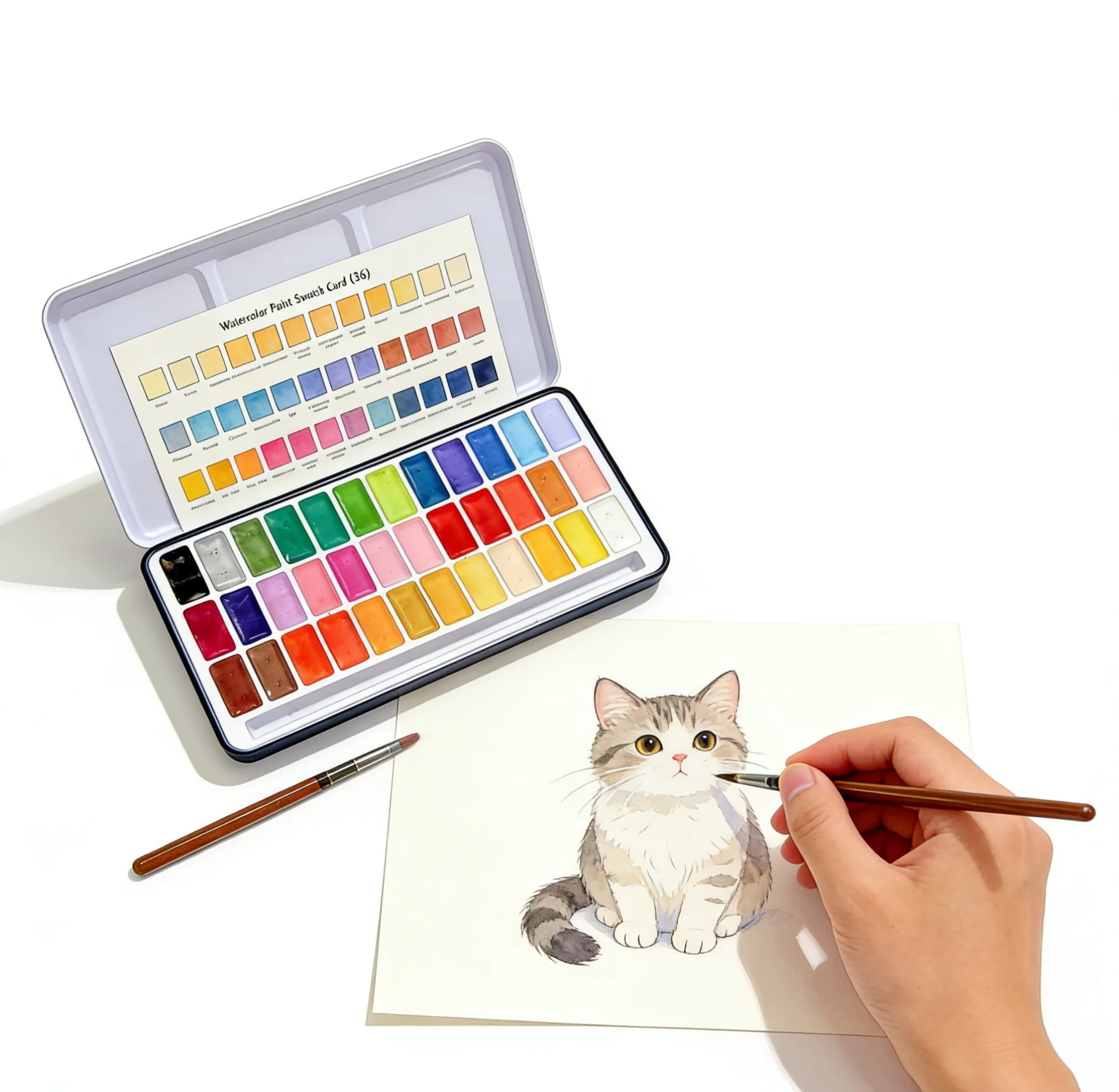
Field Performance: In pocket painting, water management is often the most cumbersome hurdle. Sets bundled with squeeze-reservoir water brushes eliminate the need to carry an open jar of water on unstable terrain. The internal pan layout maximizes color selection, which reduces the time spent mixing intermediate greens and earthy shadow tones on a tiny lid. However, packing 36 shades into a pocket tin means the paint blocks sit in close proximity; careful brush control is necessary to keep your yellow wells pristine.
Who It Suits: Travel diarists and illustrators who prioritize having a wide spectrum of pre-mixed hues ready to apply without extensive palette blending.
4. Artisan Clip-On Wooden Grids: Mini Wooden Travel Palette
A growing trend among plein air sketchers is the micro wooden palette. Crafted from hardwood with magnetic closures and integrated binder clips, this format mounts directly onto the cardboard backing of your sketchbook, keeping both paint and paper unified on a single plane.
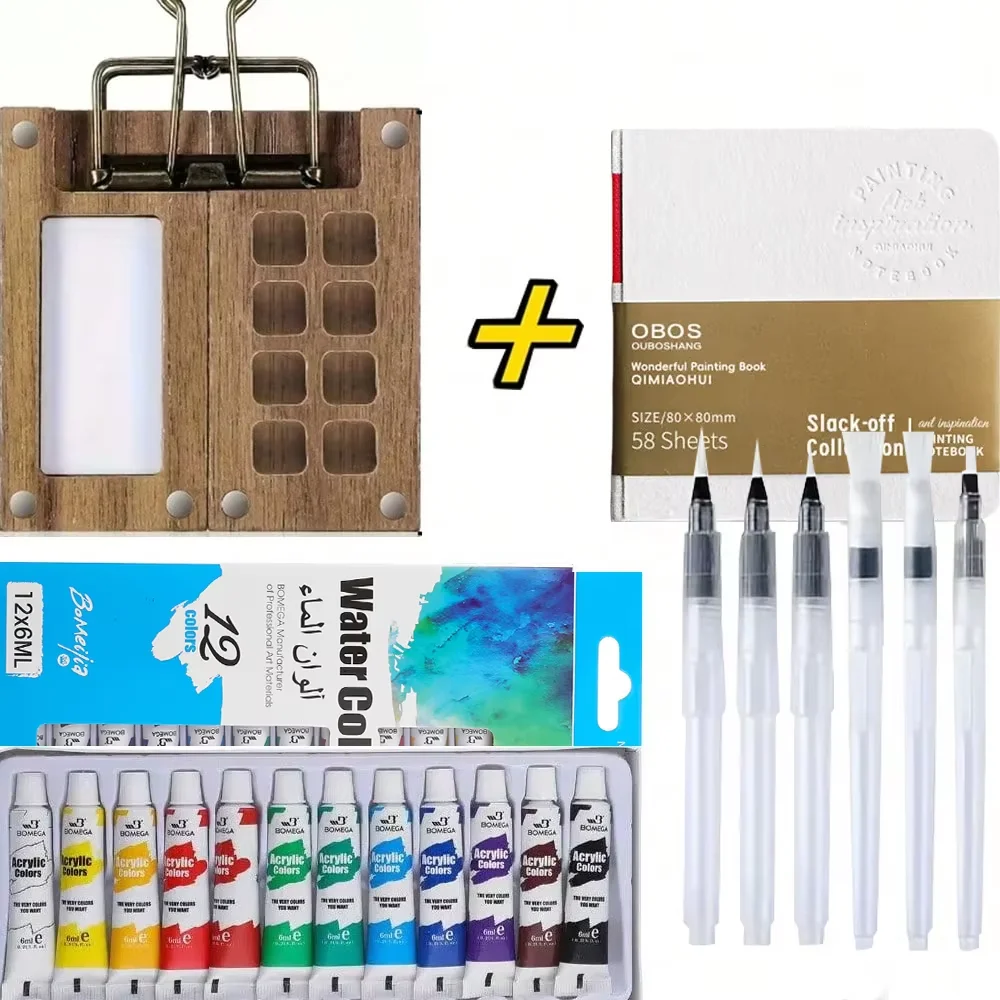
Field Performance: Wood palettes with 8 or 15 tiny routed wells represent the true minimalist extreme. They generally arrive empty or paired with miniature tubes, requiring you to squeeze and dry your own chosen pigments into the grids before leaving home. While aesthetically striking and exceptionally lightweight, wood palettes require disciplined care: leaving standing water in the wells between uses can warp the grain or degrade the protective seal over time. Mixing real estate is limited to an acrylic or enameled insert plate.
Who It Suits: Dedicated urban sketchers who maintain a tight 8-pigment split-primary palette, work standing up without a table, and appreciate classic wooden craft aesthetics.
Essential Considerations Before Packing Your Pocket Kit
When curating a lightweight painting kit, the paint box is only one component of the equation. Field workflow hinges on how your materials interact under unpredictable outdoor conditions:
- Substrate Durability: Compact paint boxes encourage rapid wet washes. As noted in ArtMate’s travel watercolor kit guide, using paper of at least 300gsm (around 140 lb) is critical when painting outdoors to prevent cockling and water pooling, especially when working on un-stretched notebook leaves.
- Pan Cleaning in the Field: On tiny palettes, dried pigment easily migrates into the mixing troughs. Carry a small synthetic rag or cellulose sponge clipped to your bag strap to clear wells without burning through water rations.
- Color Count vs. Mixing Freedom: Beginners often assume more colors equal better paintings. In reality, a 12-pan setup offers larger, easier-to-reach wells and forces harmonious color harmony, while 36-pan pocket tins are best when rapid color application takes precedence over custom blending.
Editorial Verdict: Which Paint Box Should You Carry?
If your objective is casual, ultra-portable everyday sketching without pocket drag, the SeamiArt 12-Color Set delivers surprising utility at minimal weight.
If you want a dependable field companion capable of surviving rough trail use, the MeiLiang Metal Pocket Box provides the sturdiest construction, generous thumb-ring support, and replaceable pan modularity.
For sketchbook purists who want an integrated, clip-on workstation and custom tube paints, the Wooden Grid Travel Palette provides the sleekest hands-free experience.